Eating Disorders
What are eating disorders?
Eating disorders refer to complex conditions characterised by potentially life-threatening disturbances in a person’s eating habits and behaviours.
Common behavioural patterns include:
- Self-starvation by fasting and/or food restriction
- Purging by self-induced vomiting, over-exercising, or laxative abuse
- Binging by consuming quantities of food far beyond hunger levels
More about eating disorders
Eating disorders can be understood as a coping mechanism for emotional distress, or perhaps as indicative, or symptomatic of other underlying issues. Consequently, as the destructive cycle of the eating disorder wreaks physical and emotional harm, individuals commonly surrender their sense of themselves.
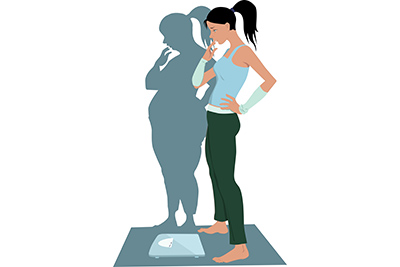
People may constantly monitor their weight, size, and shape, viewing weight gain as catastrophic, and weight loss as imperative. They will invariably hold distorted and negative self-views about their body image and their personalities. Low self-esteem generally overshadows suppression of their true needs, whilst extreme mood swings intersperse and complicate everyday interactions with others.
The following points about eating disorders are also worthy of attention:
- Eating disorders can affect anyone, frequently those perceived as high achievers
- Individuals with an eating disorder use food as a control mechanism in their lives
- People can and do recover from these conditions
The main eating disorders fall into 3 categories:
- Anorexia Nervosa
- Bulimia Nervosa
- Binge Eating Disorder
Anorexia Nervosa
This is characterised by continuous and concerted actions to reach and maintain a weight lower than average for weight, age, sex, and height by restricting food or calories, over-exercising, or inducing vomiting (HSE 2025).
Bulimia Nervosa
Bulimia nervosa constitutes repeated episodes of binge eating and subsequent purging through one or a combination of induced vomiting, excessive exercise, or misuse of laxatives, with detection difficult due to body weight often remaining within normal ranges. Bulimia is more commonplace than anorexia, with high vulnerability for females aged 18-19 years old (HSE, 2023).
Binge Eating Disorders
Binge eating disorders mean a person also engages in repeated binge eating episodes, but without intentions or actions of ridding their body of food, through unnatural or assisted means. Solitude can surround vicious diet-binge-shame cycles, with 3.5% of females and 2% of males believed to experience this type of disorder at some point in their lives. Furthermore, Binge Eating Disorder is most prevalent amongst those in their late teens and early twenties, and three times more common than Anorexia and Bulimia combined.
What causes an eating disorder?
Individuals may perceive that they are exercising control over food, their bodies, and even their lives within the confines of an eating disorder, affording access to an otherwise unattainable sense of safety.
Generally, a combination of complex factors (biological, psychological, familial, and socio-cultural) encourages the development of an eating disorder. Common risk factors promoting their manifestation include:
- Familial patterns of eating disorders, Depression, or substance misuse
- Receiving regular criticism regarding body weight, size, or shape, and eating habits
- Professional and external expectations to maintain slim or small body frames (dancers, models, or athletes)
- Specific personality characteristics, conditions, and predispositions, such as Anxiety Disorders, poor self-esteem, perfectionism, and Obsessive Personality Disorder
- Episodes of sexual or emotional abuse, or the death of a loved one
- Conflict within the family home or within social circles
- Consistent exposure to pressure or Stress at school, university, or in the workplace
- Poor sense of own self-identity, particularly in adolescence
- Over-investing emotionally, in the opinions of peers or colleagues
Support for family members
So often the unseen casualties of eating disorders are the parents, partners, children, or siblings, whose lives are engulfed by shadows of shame, guilt, hurt, anger, Depression, and Anxiety. Therapy provides an outlet to work through the turmoil and pain of these issues.
Therapy for eating disorders
Psychological and physical damage may be assessed through the multi-disciplinary teams with options for intervention including counselling, nutritional advice, psychiatric assessment, hospitalisation, or specialist voluntary groups like Bodywhys.ie
Regarding psychotherapeutic work it is crucial that the emotional background of the eating disorder is carefully considered, in developing an appropriate treatment approach. Acknowledging the eating disorder as an individual’s coping mechanism helps those around them to recognise the capacity of such a mindset, to prejudice their recovery pace and pathway. Maintenance of their eating disorder may be conceived as critical, to protect skewed views of their self-identity, and to ensure survival in the world as they perceive it.
Feelings of hopelessness, guilt, shame and self-loathing often accompany unintentional surrender to the eating disorder, hindering a person’s ability to seek help. Recovery addresses underlying issues, building self-esteem, learning to manage and express feelings, as well as working on the physical and nutritional aspects of the disorder.
Therefore, the work undertaken through therapy may also run in tandem with one-to-one dietitian support. In summary, recovery requires great courage and commitment and is dependent on the will to change, accepting the eating disorder as a problem, developing new coping mechanisms, and building resilience to life’s challenges.
Left untreated, eating disorders can disrupt someone’s job or schoolwork, and sabotage relationships with family members and friends. Waterford Counselling Centre operates upon the premise that people can and do get better!
Seeking support is a strength and not a weakness!